
Leak Detection Specialists
in Mesa, AZ
Reliable Detection, Prevention
& Leak Repair
Need leak detection in Mesa? Mesa Leak Detection provides non-invasive leak detection across Mesa, Arizona for slab leaks, underground water lines, and hidden plumbing leaks. We focus on pinpointing the source before floors, walls, concrete, or landscaping are opened for repair.
Leak Detection Services
in Mesa
Noticing a higher water bill, damp floors, warm spots underfoot, or the sound of running water when everything is off? A hidden leak may already be affecting your home.
(480) 631-3942
PRO Insight: Mesa water runs about 12 to 22 grains per gallon depending on the water source serving the property. We pay close attention to older copper supply lines here because years of mineral-heavy water combined with East Valley heat can turn a small pinhole into a hidden leak.
Serving Tempe, Chandler, Gilbert, Apache Junction, Queen Creek and surrounding Mesa areas.
Your Licensed & Local
Leak Detection Company
Mesa Leak Detection handles slab, underground, plumbing, emergency, and pool leak detection throughout Mesa and nearby Maricopa County communities. Leak locating is our specialty, so the repair starts with a confirmed location instead of exploratory cutting or digging.
Signs You May Have a Hidden Leak
- Unexplained water bill increases with no change in usage
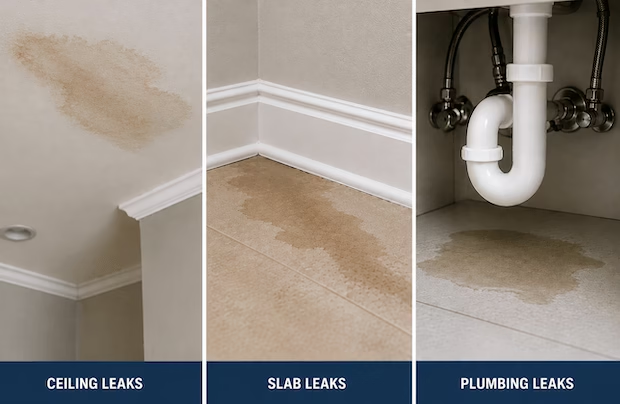
- Water stains on ceilings, walls, or baseboards
- Damp or warped flooring and soft spots underfoot
- Musty or moldy odors that do not go away
- Low water pressure across multiple fixtures
- Sounds of running water when no fixtures are on
- Water meter moving when all fixtures are off
Leak Types We Locate in Mesa
- Slab leaks beneath concrete foundations
- Plumbing leaks inside walls, ceilings, and floors
- Underground leaks in buried supply and service lines
- Pool and spa leaks from shells, fittings, and equipment
- Emergency leak detection available 24 hours a day
Tip: Check your water meter before calling. Turn off every fixture and appliance that uses water inside and outside your home. Watch the meter for 10-15 minutes. If it moves there is almost certainly an active leak somewhere in the system that needs to be located professionally.
CALL NOW
(480) 631-3942
Water Leak Detection
Services & Sources
Slab Leak Detection
in Mesa
Slab leaks occur when a pipe running beneath your concrete foundation develops a crack, pinhole, or joint failure. In Mesa homes built on slab foundations — which is the majority of the housing stock — this is one of the most common and most damaging leak types. The signs are often subtle at first: a warm spot on the floor, a water bill that climbs without explanation, or the faint sound of running water when nothing is on. Left undetected a slab leak erodes the soil beneath the foundation, damages flooring and baseboards, and creates conditions for significant mold growth. We locate slab leaks using electronic acoustic listening equipment, pressure testing, and thermal imaging before any concrete is opened. Learn more about slab leak detection in Mesa.
Plumbing Leak Detection
in Mesa
Hidden plumbing leaks — supply line leaks, pipe leaks inside walls, and fixture connection leaks — can run for weeks or months before any visible sign appears. By the time a stain shows up on your ceiling or a musty odor develops the leak has often been running long enough to cause mold growth and structural damage behind the surface. We use acoustic listening equipment, moisture meters, and thermal imaging to trace the leak source inside walls and ceilings without opening drywall unnecessarily. Access is only made at the confirmed location once the leak is precisely identified. Learn more about plumbing leak detection in Mesa.
Underground Leak Detection
in Mesa
Underground leaks in buried supply and service lines often go undetected far longer than leaks inside the home because the signs are easy to dismiss — a slightly higher water bill, a soft patch in the yard, or an unusually green strip of grass. By the time the ground is visibly saturated the leak has typically been running long enough to cause significant soil erosion and potential damage to nearby foundations and hardscape. We locate underground leaks using electronic acoustic listening equipment, ground microphones, and pressure testing without unnecessary excavation. Digging only happens at the confirmed leak location. Learn more about underground leak detection in Mesa.
Pool and Spa Leak Detection
in Mesa
Pool leaks in Mesa are frequently misdiagnosed as normal evaporation — especially during summer when daily water loss is expected. But a pool losing more than the bucket test accounts for is almost certainly leaking somewhere in the shell, plumbing, or equipment. Common sources include cracks in the pool shell, leaking fittings and light niches, buried plumbing line failures between the pool and equipment pad, and equipment pad connection leaks. We locate pool leaks using pressure testing, dye testing, and electronic listening equipment and work through each potential source systematically until the leak is confirmed. The pool must be full, clean, and clear at the time of the visit. Learn more about pool leak detection in Mesa.
Leak Detection Cost
in Mesa
- Plumbing leak detection: $150-$400
- Slab leak detection: $300-$600
- Underground leak detection: $200-$500
- Pool leak detection: $250-$400
- Emergency after-hours fee: $150-$300 additional
See our full leak detection cost guide for Mesa for detailed pricing by service type.
(480) 631-3942
_______________________________________
Hidden Leak in Mesa?
We Can Find It.

Mesa Leak Detection is built around finding hidden water leaks before repair work starts. Mesa homeowners call us when the meter keeps moving, a slab develops a warm spot, or water is disappearing somewhere they cannot see.
Mesa homeowners and property managers choose Mesa Leak Detection because we focus entirely on finding leaks — not on selling repairs or upselling services. When you call us you can expect:
Local Knowledge — In Mesa, we see a tough combination of concrete slab construction, older copper lines, very hard municipal water, and soil that changes with monsoon moisture. Those conditions make precise leak locating especially useful before anyone opens a floor or starts digging.
Non-Invasive Methods — Electronic listening equipment, pressure testing, moisture meters, and thermal imaging locate leaks without unnecessary demolition or guesswork.
Clear Communication — No hidden fees, no pressure. You receive a full explanation of what was found and what repair options are available before any work begins.
Fast Response — Mesa Leak Detection takes calls at (480) 631-3942 and prioritizes active leaks throughout Mesa and the surrounding East Valley. Same-day scheduling is available when the service calendar allows.
Maricopa homeowners and property managers call Mesa Leak Detection when a hidden leak needs to be found accurately the first time.
Leak Detection Near Me:
How it Works?
Finding and fixing a hidden leak with Mesa Leak Detection in Mesa is straightforward:
1. Call and Describe What You Are Seeing: Tell us your symptoms — high water bill, damp floor, warm spot, or running water sounds. We ask the right questions to prepare before we arrive.
2. Non-Invasive Detection: A technician arrives and uses professional detection equipment — acoustic listening devices, pressure testing, and moisture meters — to locate the leak source without opening walls or breaking concrete unnecessarily.
3. Source Identified and Explained: We tell you exactly what was found and where. You get a clear picture of the problem before any repair decisions are made.
4. Repair Arranged: Once the leak is located we arrange the appropriate repair quickly. Finding the problem first means the repair is targeted — no guesswork, no unnecessary access, no avoidable damage to your home.
5. Confirmed and Clear: After repair the system is tested to confirm the leak is resolved. If anything is not right we address it before we leave.
Do not let a hidden leak keep running. Call Mesa Leak Detection for accurate leak detection in Mesa — day or night.
(480) 631-3942
_______________________________________
Serving Mesa, Arizona
and Nearby
Mesa Leak Detection provides leak detection throughout Mesa and Maricopa, including Tempe, Chandler, Gilbert, Apache Junction, Queen Creek and surrounding communities. Whether for a home, rental property, or business, we deliver accurate leak location and reliable repair tailored to your property.
Service Area: Mesa and Maricopa, including 85201, 85202, 85203, 85204, 85205, 85206, 85207, 85208, 85209, 85210, 85212, 85213, 85215 and nearby.
(480) 631-3942
_______________________________________
Leak Detection FAQ
in Mesa
Questions about leak detection in Mesa? Call Mesa Leak Detection anytime at (480) 631-3942 or review common questions below:
HOW DO I KNOW IF I HAVE A HIDDEN LEAK IN MY Mesa HOME?
WHAT IS NON-INVASIVE LEAK DETECTION?
HOW MUCH DOES LEAK DETECTION COST IN Mesa?
WHAT CAUSES SLAB LEAKS IN Mesa HOMES?
IS EMERGENCY LEAK DETECTION AVAILABLE IN Mesa?
HOW LONG DOES LEAK DETECTION TAKE?
_______________________________________
Mesa is in the East Valley of Maricopa County, east of Phoenix, and is one of Arizona’s largest cities. It stretches from the older central Mesa grid east toward the Superstition Mountains, with a mix of established neighborhoods, newer developments, desert properties, and large master-planned communities.
(480) 631-3942
Home Services Campaign Disclaimer: This website is a free service to assist homeowners in connecting with local service providers. All contractors/providers are independent and this site does not warrant or guarantee any work performed. It is the responsibility of the homeowner to verify that the hired contractor furnishes the necessary license and insurance required for the work being performed. All persons depicted in a photo or video are actors or models and not contractors on this site.
Local Leak Detection ©2026